Impact
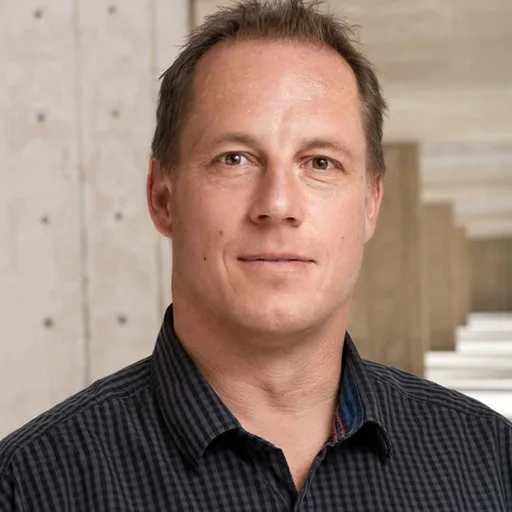
Jan Karlseder studies telomeres, the protective ends of chromosomes that shorten with each cell division, and how they set proliferative limits that restrict cancer formation while contributing to aging. His laboratory at the Salk Institute follows telomere function across the cell cycle and the cell's lifetime, from young dividing cells to senescence and crisis, the two barriers that prevent primary human cells from becoming cancerous. The lab reported that cell death in crisis is executed by the macroautophagy machinery, revealing a tumour-suppressive pathway, and that fused telomeres arising after senescence bypass activate the spindle assembly checkpoint, amplifying damage signals and causing cell death within a single cell cycle. It also found that telomeres move to the nuclear periphery after replication, linking telomere positioning to gene regulation during division. The work also addresses age-related decline in DNA repair and its relevance to premature aging syndromes. Trained at the University of Innsbruck, the University of Vienna and The Rockefeller University, he received a Glenn Award for Research in Biological Mechanisms of Aging (2009). Besides his professorship, he is Vice President and Chief Science Officer of the Salk Institute, a senior scientific leadership role.
Metrics
No public metrics available.
Research output
116 works · 12,744 citations · h-index 47 OpenAlex ↗
Selected publications
- p53- and ATM-Dependent Apoptosis Induced by Telomeres Lacking TRF2 ↗ 1999 · 1,086 citations
- Mammalian Telomeres Resemble Fragile Sites and Require TRF1 for Efficient Replication ↗ 2009 · 1,013 citations
- Telomeres: protecting chromosomes against genome instability ↗ 2010 · 1,001 citations
- Senescence Induced by Altered Telomere State, Not Telomere Loss ↗ 2002 · 803 citations
- Defective Telomere Lagging Strand Synthesis in Cells Lacking WRN Helicase Activity ↗ 2004 · 616 citations
Research funding
50 NIH awards · USD 20M total NIH RePORTER ↗
- Understanding the role of autophagy-regulated cell death in the escape from replicative crisis National Cancer Institute · 2021 · USD 639K
- Understanding the role of autophagy-regulated cell death in the escape from replicative crisis National Cancer Institute · 2020 · USD 639K
- Understanding the role of autophagy-regulated cell death in the escape from replicative crisis National Cancer Institute · 2023 · USD 626K
- Understanding the role of autophagy-regulated cell death in the escape from replicative crisis National Cancer Institute · 2022 · USD 626K
- A nucleus-to-mitochondria nucleic acid-sensing pathway prevents bypass of age-associated proliferative boundaries National Institute on Aging · 2026 · USD 613K
Links
Research fields
Sources & review · profile last updated 2026-09-29
- https://www.salk.edu/scientist/jan-karlseder/ 2026-09-23
- https://karlseder.salk.edu/ 2026-09-23