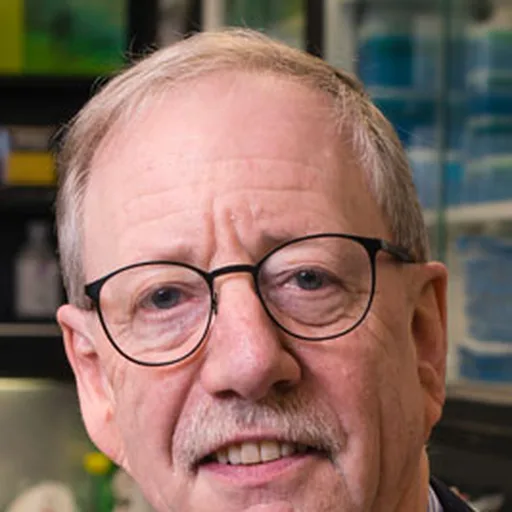
Steven Austad
Distinguished Professor; Protective Life Endowed Chair in Healthy Aging Research, Department of Biology · University of Alabama at Birmingham
Birmingham, AL, United States
Impact
Steven Austad is a biogerontologist at the University of Alabama at Birmingham known for comparative and evolutionary studies of ageing and for public communication about the science of longevity. Originally field-based, his research moved to the laboratory and focuses on species that age more slowly than humans, such as clams that live more than 500 years and hydra that show no signs of ageing, to find ways to slow ageing. His lab also develops measures of laboratory-animal health, so that life-extending treatments can be judged on healthspan as well as lifespan, and studies why the sexes often respond differently to such treatments. He directs the UAB Nathan Shock Center of Excellence in the Basic Biology of Aging and serves as Scientific Director of the American Federation for Aging Research. He was elected a Fellow of the AAAS in 2016 and chaired UAB's Department of Biology from 2014 to 2022. A former newspaper reporter and lion trainer with an English literature degree, he writes for general audiences; his books include Methuselah's Zoo: What Nature Can Teach Us About Living Longer, Healthier Lives (MIT Press, 2022). His most-cited Google Scholar entry is titled "Why do we age?".
Metrics
Research output
315 works · 16,534 citations · h-index 67 OpenAlex ↗
Selected publications
- Why do we age? ↗ 2000 · 1,803 citations
- Genetic analysis of ageing: role of oxidative damage and environmental stresses ↗ 1996 · 652 citations
- Sex Differences in Lifespan ↗ 2016 · 625 citations
- Why women live longer than men: Sex differences in longevity ↗ 2006 · 517 citations
- Comparative biology of mammalian telomeres: hypotheses on ancestral states and the roles of telomeres in longevity determination ↗ 2011 · 489 citations
Research funding
28 NIH awards · USD 10M total NIH RePORTER ↗
- Comparative Bioenergetics of Aging National Institute on Aging · 2025 · USD 1M
- Comparative Bioenergetics of Aging National Institute on Aging · 2023 · USD 893K
- Comparative Bioenergetics of Aging National Institute on Aging · 2020 · USD 893K
- Comparative Bioenergetics of Aging National Institute on Aging · 2021 · USD 893K
- Comparative Bioenergetics of Aging National Institute on Aging · 2024 · USD 893K